How Much Do Solar Panels Actually Save North Carolina Homeowners on Their Energy Bills?
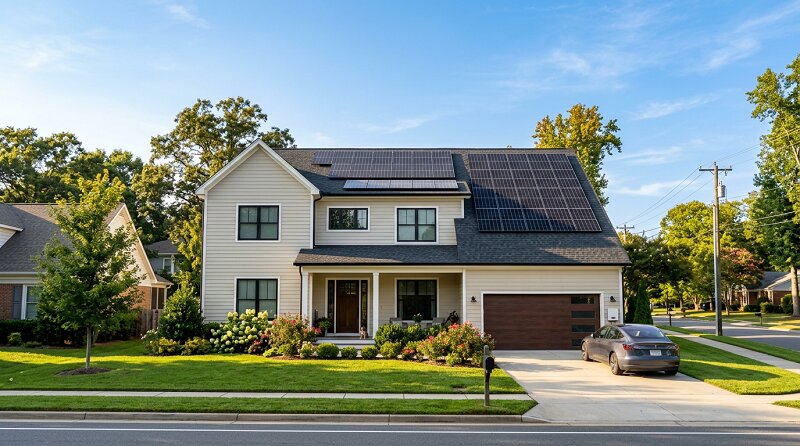
If you’re considering solar panels at your North Carolina home, you might wonder if the savings are worth the investment. Electricity bills can drop considerably, but the exact amount depends on your local rates, upfront costs, and available incentives. While installation may seem steep, state programs and tax credits can offset much of that. Curious how solar payback, net metering, financing, and technology advancements impact your bottom line? There’s more to the story.
Overview of Solar Panel Savings in North Carolina
Homeowners in North Carolina can anticipate significant savings by installing solar panels. On average, they may reduce their electricity bills by approximately $132 per month, resulting in annual savings of over $1,500. The capacity to generate electricity on-site allows homeowners to offset their energy consumption and take advantage of net metering, where excess electricity produced can be credited back to the grid. This mechanism further decreases utility fees from companies such as Dominion Energy and Progress Energy.
Over the lifespan of a solar panel system, total savings can accumulate to thousands of dollars. Additionally, solar panel installations can positively affect property values, with estimates suggesting an increase of about 4.1% for homes equipped with solar energy systems.
Furthermore, the financial viability of solar investments is enhanced by federal incentives, including the investment tax credit, which allows homeowners to deduct a percentage of the installation cost from their federal taxes.
Overall, these factors indicate that solar energy presents a practical financial option for residents in North Carolina.
Key Factors Influencing Solar Payback Period
When evaluating the financial viability of solar panels in North Carolina, several key factors influence the payback period of the investment. The size of the solar energy system, the efficiency of the panels, and installation costs are primary determinants of energy production, which in turn affects future utility bill offsets and overall savings.
North Carolina's net metering policy allows homeowners to export excess electricity (measured in kilowatt-hours) back to the grid, enabling them to receive credits valued at full retail rates. This mechanism can substantially lessen the costs associated with traditional utility providers, such as Dominion.
Additionally, the availability of federal tax credits and investment tax exemptions can directly reduce a homeowner’s overall tax liability, further enhancing the financial appeal of solar energy systems.
Moreover, consulting industry reviews and analyses can assist homeowners in making informed choices about solar providers and technologies, ultimately aiding in the optimization of their investment in photovoltaic systems in the state.
By understanding these elements, potential solar adopters in North Carolina can better assess the economic implications of their decision.
Electricity Rates and Trends in North Carolina
Electricity rates in North Carolina have observed a significant increase in recent years, with a 24% rise from 2020 to 2024, culminating in an average cost of 14.1 cents per kilowatt-hour (kWh). This escalation has resulted in annual electricity expenses for households surpassing $1,500, positioning them above the national average as reported by the Energy Information Administration.
Utility companies such as Dominion and Progress Energy adjust their rates based on various factors, including the structure of the rate schedule, the size of the system, and relevant policy regulations.
Homeowners may consider the installation of solar panels as a strategy to mitigate these rising costs. By generating their own electricity, these systems can help offset future utility bills, potentially resulting in significant savings over time.
Additionally, it is prudent to consider battery storage solutions which enable homeowners to store excess energy for later use, further enhancing cost savings.
The federal Investment Tax Credit (ITC) remains a vital factor for those contemplating solar investments, contributing to the financial feasibility of such projects.
It is advisable for homeowners to thoroughly evaluate these options and consult related resources to make informed decisions regarding their energy consumption and expenditure.
Net Metering and Its Impact on Utility Bills
Net metering plays a significant role in the economic considerations for North Carolina homeowners who are exploring the installation of solar panels. Under this policy, homeowners are able to send excess electricity generated by their solar panels back to the grid, which is then credited to their utility bill.
Utilities such as Dominion Energy and Progress Energy offer full retail net metering, allowing customers to offset future charges based on the amount of excess energy produced.
The financial implications of net metering can be substantial. Homeowners can reduce their electricity bills, as they essentially pay for net consumption—only the amount of electricity that exceeds what they generate. Over the repayment period, this can result in significant savings.
It is important for potential solar customers to conduct thorough research, including examining company reviews and reviewing the terms of service, as these factors can influence the overall value of the investment.
Additionally, net metering can contribute to an increased property value due to lower utility costs and the appeal of renewable energy sources.
Overall, the structure of net metering in North Carolina presents a compelling case for homeowners considering solar power, enhancing the financial viability of solar energy installations.
Upfront Costs and Financing Options for Solar
Considering an investment in solar energy for your home in North Carolina involves understanding both the costs and available financing options. The average expenditure for an 8.19 kW solar system is approximately $22,970, aligning with the national cost of around $2.80 per watt.
In North Carolina, financing alternatives such as leasing can make solar energy more accessible. For instance, programs like LightReach may offer monthly payments around $95, which can ease the upfront financial burden.
Installing solar panels allows homeowners to generate their own electricity, which can help mitigate future energy costs and potentially decrease overall utility bills. Additionally, North Carolina offers a property value exemption for solar installations, meaning the value added by the system may not increase property taxes.
Battery storage solutions are also available, allowing homeowners to reduce dependence on the grid and manage energy usage more effectively.
Before making a decision, it is advisable to thoroughly review company reputations and address any frequently asked questions to ensure a well-informed choice.
Available Incentives and Rebates for Homeowners
For homeowners in North Carolina considering solar panel installation, various financial incentives and rebates are available that can effectively reduce overall costs. One of the primary incentives is the federal income tax credit, which allows homeowners to deduct 30% of the installation costs from their tax liability.
Additionally, North Carolina offers an investment tax credit that, when combined with a rebate from Duke Energy, can lead to savings of up to $4,000.
Homeowners should also be aware of state-level exemptions that apply to solar panel installations. Notably, there are no additional property taxes levied on the added value of the solar panels, and a sales tax exemption is available for the purchase of the solar systems.
Furthermore, homeowners can participate in the Solar Renewable Energy Certificates (SRECs) program, which enables them to sell excess electricity generated by their solar systems back to the grid. This can help mitigate future electricity costs and potentially shorten the payback period for the initial investment in solar technology.
Overall, the combination of tax credits, rebates, and exemptions in North Carolina presents a financially viable option for homeowners interested in solar energy, supporting informed decision-making regarding their investments.
Lifetime Value and Home Resale Benefits
Solar panel installation in North Carolina offers several tangible financial benefits that can contribute to long-term economic stability for homeowners. By adopting solar energy, households can decrease their dependency on grid electricity, effectively eliminating monthly electricity expenses while also mitigating future utility costs.
Homeowners in North Carolina may anticipate savings that amount to approximately $60,000 over a span of 25 years, which reflects the cumulative impact of reduced energy bills. For more detailed information on solar savings, you can visit https://solarpanelnorthcarolina.com/.
Furthermore, solar panel installation can increase property values in the region, with estimates suggesting potential increases of up to 4.1%. This rise in property value can be attributed to the long-term savings and sustainability aspect associated with solar energy systems.
Additionally, net metering policies in North Carolina allow homeowners to receive compensation for excess electricity generated and sent back to the grid, which further enhances the financial viability of solar installations.
Once the payback period for these systems has elapsed, homeowners are likely to benefit from free electricity, solidifying the economic rationale behind investing in solar technology.
It is advised for potential investors to conduct thorough research, including reviewing company ratings and customer feedback to make well-informed decisions regarding solar panel installations.
Comparing Standard and Time of Use Rate Schedules
An analysis of electricity rate options in North Carolina highlights significant differences in solar savings between standard and Time of Use (TOU) rate schedules. Under standard rate schedules, homeowners with solar panels can offset their electricity bills at the full retail rate through net metering, which credits them for any excess energy they send back to the grid on a per-kilowatt-hour (kWh) basis.
This can result in substantial financial savings over the system's payback period, as supported by data from utility companies and customer reviews.
In contrast, TOU rates vary based on the time of day, which can affect the value of credits earned from excess solar energy. Typically, these rates incentivize usage during off-peak hours when electricity demand and prices are lower.
Homeowners in North Carolina should assess their energy consumption patterns and review relevant information to make well-informed choices that can lead to reduced electricity costs. Evaluating the specific characteristics of both rate schedules is essential for optimizing the economic benefits of solar energy investments.
Battery Storage: Added Value or Additional Expense
The increasing adoption of battery storage alongside residential solar systems has prompted a closer examination of its financial implications.
In North Carolina, incorporating battery storage with solar panels can enhance energy reliability and mitigate the impact of potential grid outages; however, homeowners may incur significant additional costs. Unlike solar installations that benefit from full retail net metering, battery systems generally have a longer payback period due to their associated expenses.
Notably, major utilities in the region, such as Dominion Energy and Progress Energy, typically do not provide compensation for battery usage in the same manner as they do for solar energy fed back into the grid.
To evaluate the potential value of battery storage as an investment, homeowners should conduct a thorough analysis. This includes comparing the different utility rate schedules, examining monthly energy bills, assessing the overall system size, and investigating available tax incentives.
A comprehensive approach will enable consumers to make informed decisions regarding the integration of battery storage into their solar energy systems.
Regional Considerations and Choosing an Installer
Regional considerations significantly influence the solar savings that homeowners in North Carolina can anticipate, as well as the overall process of installing solar energy systems.
In the state, metering policies differ among utility companies, such as Dominion Energy and Progress Energy. These policies determine the compensation homeowners receive for excess electricity generated and sent back to the grid, influencing whether these credits are applied at full retail rates or as offsets to future utility bills.
It is advisable for homeowners to research installer options thoroughly by reviewing company track records and obtaining free quotes. This allows for an informed comparison of critical factors, including cost per watt, system size, and expected payback period.
Additionally, the installation of solar panels may contribute to an increase in property value within North Carolina. The federal income tax credit further enhances the financial appeal of such investments, potentially resulting in substantial savings over time.
Overall, these considerations underline the importance of conducting due diligence when exploring solar energy options in the region.
Conclusion
By choosing solar panels in North Carolina, you can lower your energy bills, benefit from state and federal incentives, and even boost your property’s value. With manageable upfront costs, low maintenance, and long-term savings, you’ll gain more control over your energy use while supporting a cleaner environment. Whether you buy, lease, or join a community solar program, making the switch puts more money in your pocket and sets you up for greater energy independence.
|


